
What if one of the biggest disruptions in modern healthcare also forced us to start asking better questions?
COVID brought fear, loss, confusion, division, and a level of uncertainty most of us had never experienced before. This episode is not about relitigating any of that. It is not about vaccines, politics, hearings, or who was right.
It is about what changed afterward.
In this episode of Rise Above, I’m looking at five ways COVID changed healthcare for the better, from patients refusing to accept “your labs are normal” as the final answer to the growing recognition of complex conditions like POTS, MCAS, immune dysregulation, and long COVID.
More importantly, I want to talk about what happens when someone still doesn’t feel like themselves years later and conventional testing says everything looks fine.
COVID changed a lot of things we may wish had never changed. But it also made more people willing to keep asking one important question: Why do I still feel this way?
If you've turned on the news this week, you've probably seen Fauci testifying. Diary entries. Senate hearings. Headlines everywhere.
And if watching that dragged you right back to 2020 — the fear, the confusion, the arguing, the whiplash — I want you to know you're not alone. A lot of my patients felt it this week. That specific, low-grade dread of “oh no, we're doing this again.”
Here's what I want to say clearly, right up front: I'm not here to relitigate any of it. Not him, not the hearing, not who was right. I'm not weighing in on that circus, and I'm not asking you to either.
Vaccinated. Unvaccinated. Boosted. Hesitant. Long COVID. Vaccine-injured. However you landed on any of it — you're welcome in this conversation, because that's not actually the question I care about anymore.
Hi, I'm Dr. Emily Wheeler. Twenty years in functional medicine, looking for the patterns most people miss.
I'm less interested in relitigating 2020. I'm more interested in helping you feel better right now.
And I want to say something today that might sound strange with all that noise in the background: I'm actually grateful for COVID.
Not for what it cost us. For what it changed.
Let me be clear about what I'm not grateful for. Not the lives lost. Not the isolation, the fear, the families torn apart, the people still living in the aftermath in their own bodies right now. None of that.
But something shifted underneath all of it. And that part — I will not apologize for being grateful for.
Here are five things that changed for the better. Five things I watch play out in my office every single week.
One. People stopped accepting “your labs are normal” as the final answer. Before COVID, a clean panel usually ended the conversation. Now patients push back. “I know something's wrong. Keep looking.” That muscle didn't disappear once COVID left the headlines.
Two. Root-cause thinking went mainstream. Inflammation. Immune dysregulation. Mitochondrial health. These used to be words only I used. Now patients bring them up before I do.
Three. Complex conditions finally got taken seriously. POTS. MCAS. The kind of exhausting, hard-to-diagnose symptom clusters that used to get waved off as anxiety. Millions of people developed a COVID version of that pattern almost overnight — and it made the world pay attention to something patients had been saying for years.
Four. People started asking for real testing. Not just a CBC and a TSH. Full thyroid panels, nutrient status, gut testing — because a fifteen-minute visit stopped being enough for people who wanted the whole picture.
Five. Doctors got permission to say “I don't know yet.” COVID forced medicine to be honest about uncertainty, in public, on a massive stage. That normalized something functional medicine already believed: “I don't have the full answer today, but let's keep investigating” is a legitimate thing for a doctor to say out loud.
I want to tell you about Terry.
Terry came to me almost two years after their COVID infection. Still exhausted. Still foggy. Every conventional workup came back clean — and Terry had been told, more than once, that it was probably just anxiety. Terry didn't believe that. Neither did I.
So we didn't start with a guess. We started with the timeline — infection, symptoms, stress, hormones, history. Then we looked underneath: mitochondrial stress, an immune system still running hot months after the virus was gone, nutrient stores that had been quietly drained the whole time nobody was looking. None of that shows up on a standard panel. All of it shows up in how someone feels every single day.
Six months later, Terry wasn't running marathons. Terry was just back. Back to making dinner without needing a nap first. Back to finishing a sentence without losing the thread.
That story isn't unique. I've watched it play out again and again since 2020 — people whose immune systems never fully stood down, whose energy production got quietly wrecked, who spent years being told there was nothing more anyone could do.
The body doesn't care about Twitter arguments. It just wants to heal. And there's almost always more you can do — you just have to be willing to go looking for it.
That's the part of this that gives me hope. Not the virus. Not the headlines this week. The fact that more people than ever are finally getting someone to ask why — and finally getting their lives back because somebody did.
If you're one of those people — if you still haven't felt like yourself since 2020, infection or vaccine or both, doesn't matter which — please hear this: “your labs are normal” is not the end of the conversation. It's the beginning of a better question.
So if this week's news has you spiraling back into 2020 in your head — I get it. But I don't want you to leave this episode there.
I want you to leave it remembering that something good actually came out of all of it. People stopped accepting silence as an answer. And that's still happening, in offices like mine, every single week.
Your symptoms aren't random.
Your body is talking.
Let's listen.
Dr. Emily Wheeler
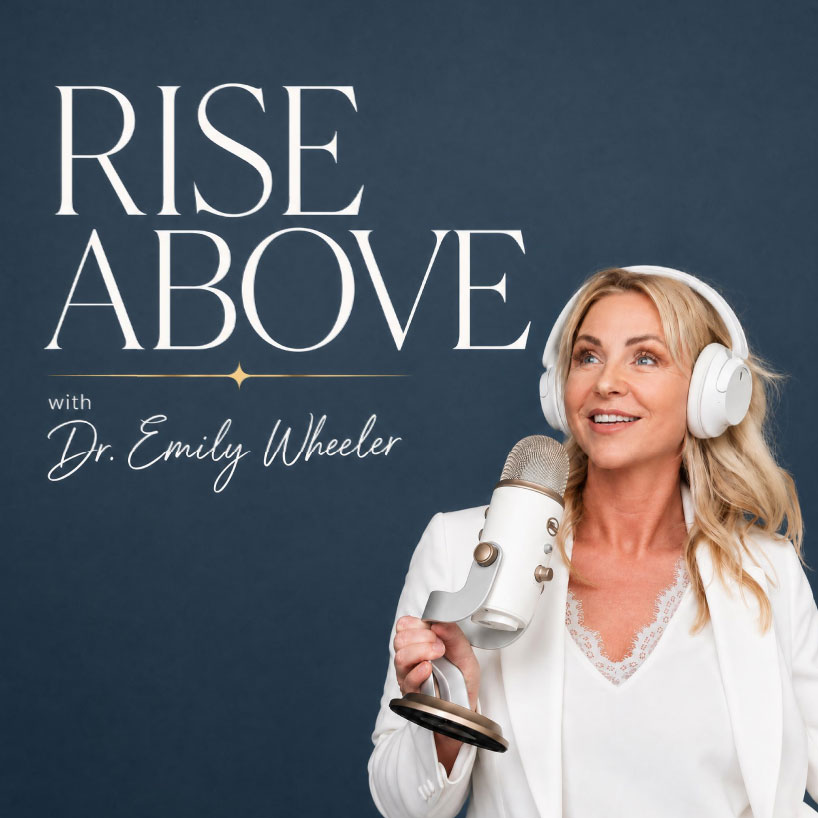
Dr. Emily Wheeler is a functional medicine practitioner, speaker, educator, and host of the Rise Above podcast. With nearly 20 years of clinical experience, she helps women uncover the root causes of chronic symptoms through personalized, science-based care. Her mission is to help women understand their bodies, restore their vibrance, and rise above the gaps in healthcare.




Learn how Dr. Emily currently works with patients and where to begin.